Sunday, 22 September 2013

The Bucket Squirt Phys-elation

There are occasions when you can get hopped up on physics. You'll be taking it easy exploring a bit of physics when BAM! You find out about something revolutionary. Something like quantum tunnelling. It leaves you shocked and excited. Perhaps even sit-down excited. It's the physics feel good moment. A phys-elation. It's not the same as a eureka moment, but it is a good thing that happens more than once. Sometimes you'll know it's coming, sometimes you won't. But, they're pretty hard to forget.
Physics not drugs!

A Phys-elation Memory

Despite being hard to forget, I've never really reminisced about a phys-elation. Nonetheless, whilst writing The Seaside Physics Juxtaposition, a particular phys-elation memory crawled back to the surface of my mind. It was at A level, learning about circular motion. If you swing around a bucket of water fast enough, the constant change in velocity will force the water to stay in the bucket. However, if the bucket has a hole in bottom, water will squirt out of the hole... most of the time. If the holey bucket is being swung vertically, there is a point at the top  of the swing where the force of gravity can equal the centrifugal force that makes the water squirt out.

If you want to know the equation, the velocity for a squirt free climax has to be:
in which g is the acceleration due to gravity and r is the distance to the bucket from the pivot - your shoulder.

When the velocity is this value at the climax of the swing, water will stop squirting out. All standard stuff, no phys-elation at this point.

After learning this, we (the class) wanted proof, so we spent the rest of the lesson getting it. And we got it. This is our recording taken by a phone taped to a holey bucket of water being swung around.

It wasn't a eureka moment... but it was a phys-elation! You know what they say, small things please small minds, but not all minds pleased by small things are small minds... savvy?

The Circular Motion

If you want to look up any of the physics mentioned here, The Fitzpatrick Physics Files will direct you to a perfect resource for it. Specifically the Classical Mechanics notes.

That bit at the end...

The video above is courtesy of Skipper - it was his phone that recorded it. Skipper blogs over at Confessions of a Wildlife Biologist. You should check it out! Thanks to Skipper for risking his phone all those years ago!
Confessions of a Wildlife Biologist,

Read More »

Monday, 16 September 2013

The Vagabond Decision Algorithms

In the last blog post, I was in the scenically crowded seaside town of Whitby. Since that time I have packed my bindle and journeyed on southward. When it came to unpacking, I had to pause for awe. There was so much packed, it was ridiculous! But it reminded me of something. It reminded me of the bin packing algorithm. This bit of maths comes under the umbrella known as "Decision Mathematics". Of course, it's basically about making decisions using mathematical reasoning, such as with algorithms.
The Vagabond Decision Algorithm.

Decision Maths on the Cranium

Decision maths (DM) is something for the physicist, and something for the Cranium List. The reason for it making the list is that it's interesting, doesn't take long to pick up, and has links with quantum computing like with Shor's algorithm for quantum factorisation.

There are various resources that you could use to learn DM. However, I don't think that you need to spend 5 minutes watching a YouTube video about one algorithm when you could learn it in a single minute. Similarly, I don't think that you need to spend 5 minutes reading about an algorithm. So, here's the 3 resources:

The Student Room

Uncovered at Student Room D1 Revision Notes. It's well laid out, simply worded, has examples and has some video links. Unfortunately the algorithms are on different pages so you need to click through them.
The Student Room.

WikiBooks

Buried at WikiBooks OCR D1. This is a vague summary of the OCR course book for A level DM. (It's actually the book that I used.) The bonus of this resource is that the relevant notes are all one page.
WikiBooks

@ilovemathsgames

Also worth a mention is Decision 1 for Numpties. These are hand-written notes by a maths teacher (@ilovemathsgames). Although they have a good content, they remind me of when I would borrow girls notes at college!
Decision 1 for Numpties.

Final Words

Depending upon which part of physics interests you, you may never use anything from DM. But that doesn't mean you shouldn't know it, especially when it has quick rewards. Decision 1 is the first out of 2 modules in decision maths at A level. So you can dig a bit deeper if you like. As a final word, a good vagabond should know packing and route inspection algorithms, but unlike a regular vagabond, my bindle is actually a Peugeot 206...

That bit at the end...

It was very alarming when, 10 days after publishing this post, my blogger app decided to betray me. It completely removed the Vagabond Decision Algorithms post. As in, the entire post was lost. My day spiralled out of control. I was a lost cause. Hours later, submerged in empty bourbon cream packets and a tangled cardigan, I found some reluctant energy. Determined, I managed to discover a chrome extension that allowed me to load a cached webpage...  The Vagabond Decision Algorithms was back in the room!


Read More »

Saturday, 24 August 2013

The Seaside Physics Juxtaposition

I grew up in an English seaside town. Dirty yellow boots, stinking scampi and tourists, lots and lots of tourists. I lived there until I was eighteen. Right now, I've found myself back in that seaside town where my physics cranium started. It's odd to look back and wonder why I got into physics. I'd like to say something elegantly epic like:

 "[I] wanted to be part of the romantic, exciting adventure to tease apart [the universe's] mysteries", 

as on Michio Kaku's website. But the truth is that that's a load of garbage. It's something that this seaside town nurtured overtime. This seaside town of Whitby, North Yorkshire.

A Physics Motivation

Some physicists would agree that their motivation for doing physics came when they were aged 16 to 18. For a lot of people in the UK, that's when they are studying their A levels. I did my A levels in Whitby, and it's true that they did play a major part in my motivation. But an interesting note is that A level is optional, so you need to like physics to choose physics to study physics. So what happened to me? What made me like physics enough to choose physics to study physics? Well, physics is everywhere. No matter where you look, some event takes place that involves physics. I think it's a possibility that I was tuning into seaside physics as an inspiration.
muon Academy flag!

Seaside Physics

The seaside is a non-stop physics puzzle.  Looking around at the tourists, I doubt many of them consider the collection of physics they are visiting.  If they were slow down for a moment, put their map book away, I'm sure they could be found staring with glazed eyes. It's my most used expression. The expression that I use when I'm trying to figure something out. These are some of the seaside physics that have given me, and still give me, that glazed eye expression:
  • Do different flavours of ice cream melt at different rates?
  • At which point would we consider a wave to start?
  • Why do waves come above water and erupt in a frothy, foamy explosion?
  • What made the cliff fall down, exposing old graves from St Mary's church?
  • What's the point when sand stops being too dry or too wet to be made into a decent sandcastle?
  • What's the best way to put a flag on a sandcastle without destroying the castle?
  • Why is it more windy at the seaside than inland?
  • How much altitude could that seagull have gained when it kicked my head? (Honestly, that happened a few days ago.)
...and that's not the end, there are more, lots and lots more, most of which remain unanswered. By applying theories of physics, there are lots of potential answers but rarely a firm conclusion. So despite being sure that the seaside has had some involvement, the reason I chose to do physics is, well, it's complicated.


That bit at the end...

Michio Kaku's website - why he became a physicist:
http://mkaku.org/home/?page_id=256
Read More »

Sunday, 14 July 2013

The Thidé Book of EMT

An entire book on electromagnetic theory, free to download! That was my reaction when I found exactly that. It comes from a physicist who works at Uppsala University. A physicist named Bo Thidé, and the book, of course, is called "Electromagnetic Field Theory".

Electromagnetic Field Theory by Bo Thidé

I found this book out of necessity - I needed to look-up some EMT. It's the course book for a Classical Electrodynamics course at Uppsala University, so at least it has that reliability. It has also been recommended by Gerard t'Hooft, on the page that landed here.  To say a piece about the content, it's nice and concise, with a large mathematical formula section at the end. It's level is late-undergraduate and postgraduate - so Bones and Jaw. There's also an exercise book that can be found on the same website. It used to be available on Amazon, but it came with a cover designed by Albert Hofmann (well it looks like it was).
A garish existence on Amazon.
Before I found this book I didn't know about the Swedish city, Uppsala. Turns out it's the fourth largest city in Sweden, has some pretty impressive buildings and is home to the oldest Swedish university... yep, Uppsala University. This particular university once had it's doorways darkened by Anders Celsius, inventor of the Celsius scale. It's clear that Uppsala is a great city for it's own reasons, but for me, Bo Thidé has put Uppsala on the map.

I like this book!
Tack, Bo Thidé.

Links:

Download page for Electromagnetic Field Theory by Bo Thidé:
http://www.plasma.uu.se/CED/Book/index.html#download
Read More »

Thursday, 11 July 2013

The Astronomy Virtualisation

It's difficult to not feel like dreamers when looking up at the night sky. Unless you're kicking it in the big smoke ... or anywhere that has a street light. That's because of light pollution. But you can freely defeat light pollution with a laptop, smartphone or tablet. I'm not talking about hacking the government, I'm talking of virtual astronomy. Below are three of the best methods of astronomy virtualisation.


Sky Map

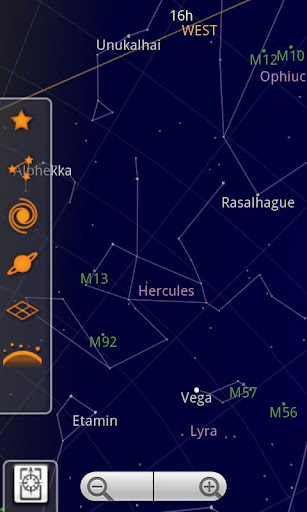
This app's available on Google Play, hence it's for Android. When pointing it at the stars, it can feel a little bit "shaky", but it's got all the basic astronomy kicks to get you spinning. If you can see the stars in real life, Sky Map is a good way to check out what you're looking at, then you can say to someone: "Your eyes are brighter than Sirius... it's that one there", or something rubbish like that.
Sky Map.

Stellarium

This one's free for Mac, Windows and Linux and can be downloaded from the Stellarium website. Some planetariums actually use this program. It's really nice to be able to see what the universe looks like from another planet's perspective. But the best bit is going in spaceship mode and take yourself to the Moon and back.
Mars as the Mars Rover sees it, according to Stellarium.

Planetarium

This post is being written on a Chromebook, a machine which won't run either Sky Map or Stellarium. So as an alternative, you can use the Planetarium website. You may expect to have to log-in to the website, but you don't, you just load the page. It's also available as a Google Chrome extension. Planetarium is like Sky Map - straight up and simple.
Screenshot of the Planetarium website (set at a random date).

Of Interest:

Horrendous astronomy pick-up lines (where the "brighter than Sirius" one was found):
http://tehcip.wordpress.com/2013/01/17/astronomy-pick-up-lines/
Read More »