Saturday, 24 August 2013

The Seaside Physics Juxtaposition

I grew up in an English seaside town. Dirty yellow boots, stinking scampi and tourists, lots and lots of tourists. I lived there until I was eighteen. Right now, I've found myself back in that seaside town where my physics cranium started. It's odd to look back and wonder why I got into physics. I'd like to say something elegantly epic like:

 "[I] wanted to be part of the romantic, exciting adventure to tease apart [the universe's] mysteries", 

as on Michio Kaku's website. But the truth is that that's a load of garbage. It's something that this seaside town nurtured overtime. This seaside town of Whitby, North Yorkshire.

A Physics Motivation

Some physicists would agree that their motivation for doing physics came when they were aged 16 to 18. For a lot of people in the UK, that's when they are studying their A levels. I did my A levels in Whitby, and it's true that they did play a major part in my motivation. But an interesting note is that A level is optional, so you need to like physics to choose physics to study physics. So what happened to me? What made me like physics enough to choose physics to study physics? Well, physics is everywhere. No matter where you look, some event takes place that involves physics. I think it's a possibility that I was tuning into seaside physics as an inspiration.
muon Academy flag!

Seaside Physics

The seaside is a non-stop physics puzzle.  Looking around at the tourists, I doubt many of them consider the collection of physics they are visiting.  If they were slow down for a moment, put their map book away, I'm sure they could be found staring with glazed eyes. It's my most used expression. The expression that I use when I'm trying to figure something out. These are some of the seaside physics that have given me, and still give me, that glazed eye expression:
  • Do different flavours of ice cream melt at different rates?
  • At which point would we consider a wave to start?
  • Why do waves come above water and erupt in a frothy, foamy explosion?
  • What made the cliff fall down, exposing old graves from St Mary's church?
  • What's the point when sand stops being too dry or too wet to be made into a decent sandcastle?
  • What's the best way to put a flag on a sandcastle without destroying the castle?
  • Why is it more windy at the seaside than inland?
  • How much altitude could that seagull have gained when it kicked my head? (Honestly, that happened a few days ago.)
...and that's not the end, there are more, lots and lots more, most of which remain unanswered. By applying theories of physics, there are lots of potential answers but rarely a firm conclusion. So despite being sure that the seaside has had some involvement, the reason I chose to do physics is, well, it's complicated.


That bit at the end...

Michio Kaku's website - why he became a physicist:
http://mkaku.org/home/?page_id=256
Read More »

Sunday, 14 July 2013

The Thidé Book of EMT

An entire book on electromagnetic theory, free to download! That was my reaction when I found exactly that. It comes from a physicist who works at Uppsala University. A physicist named Bo Thidé, and the book, of course, is called "Electromagnetic Field Theory".

Electromagnetic Field Theory by Bo Thidé

I found this book out of necessity - I needed to look-up some EMT. It's the course book for a Classical Electrodynamics course at Uppsala University, so at least it has that reliability. It has also been recommended by Gerard t'Hooft, on the page that landed here.  To say a piece about the content, it's nice and concise, with a large mathematical formula section at the end. It's level is late-undergraduate and postgraduate - so Bones and Jaw. There's also an exercise book that can be found on the same website. It used to be available on Amazon, but it came with a cover designed by Albert Hofmann (well it looks like it was).
A garish existence on Amazon.
Before I found this book I didn't know about the Swedish city, Uppsala. Turns out it's the fourth largest city in Sweden, has some pretty impressive buildings and is home to the oldest Swedish university... yep, Uppsala University. This particular university once had it's doorways darkened by Anders Celsius, inventor of the Celsius scale. It's clear that Uppsala is a great city for it's own reasons, but for me, Bo Thidé has put Uppsala on the map.

I like this book!
Tack, Bo Thidé.

Links:

Download page for Electromagnetic Field Theory by Bo Thidé:
http://www.plasma.uu.se/CED/Book/index.html#download
Read More »

Thursday, 11 July 2013

The Astronomy Virtualisation

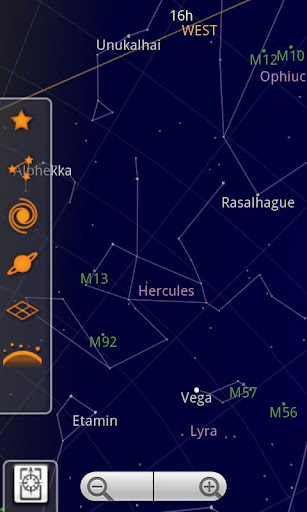
It's difficult to not feel like dreamers when looking up at the night sky. Unless you're kicking it in the big smoke ... or anywhere that has a street light. That's because of light pollution. But you can freely defeat light pollution with a laptop, smartphone or tablet. I'm not talking about hacking the government, I'm talking of virtual astronomy. Below are three of the best methods of astronomy virtualisation.


Sky Map

This app's available on Google Play, hence it's for Android. When pointing it at the stars, it can feel a little bit "shaky", but it's got all the basic astronomy kicks to get you spinning. If you can see the stars in real life, Sky Map is a good way to check out what you're looking at, then you can say to someone: "Your eyes are brighter than Sirius... it's that one there", or something rubbish like that.
Sky Map.

Stellarium

This one's free for Mac, Windows and Linux and can be downloaded from the Stellarium website. Some planetariums actually use this program. It's really nice to be able to see what the universe looks like from another planet's perspective. But the best bit is going in spaceship mode and take yourself to the Moon and back.
Mars as the Mars Rover sees it, according to Stellarium.

Planetarium

This post is being written on a Chromebook, a machine which won't run either Sky Map or Stellarium. So as an alternative, you can use the Planetarium website. You may expect to have to log-in to the website, but you don't, you just load the page. It's also available as a Google Chrome extension. Planetarium is like Sky Map - straight up and simple.
Screenshot of the Planetarium website (set at a random date).

Of Interest:

Horrendous astronomy pick-up lines (where the "brighter than Sirius" one was found):
http://tehcip.wordpress.com/2013/01/17/astronomy-pick-up-lines/
Read More »

Tuesday, 18 June 2013

The Pasture of C++ Notes

A while ago I needed to learn a programming language. But which one? There's a lot to choose from. Baffled and confused, I took a piece of advice from a computer scientist friend: "C++, because once you learn that, all other languages will follow". Nice and simple, now to learn it.

A lot of graduate students will start their studies without knowing a great deal of programming languages. This means that when they start, they need to learn it. So most places put on computing lectures for these students as soon as they start and, most of the time, they put it on the internet.

The following resource is, as it says, from the DESY Summer School. The notes you can get are a pdf of the slides/handouts that were used in the lectures. As always, lecture notes are quick to the point and they won't go unnecessarily out of the way. For example, the language FORTRAN is described as VW Beetle, whereas C++ is described as a Formula 1. Nice and snappy, but I think a more amusing comparison would be a plain to one of those ribbed things... Regardless, here it is:
https://www.desy.de/~blist/summerstudents/c++-intro-10-offhandout.pdf
A drawback of the notes is that they may not go into enough detail. That's why you can use another resource along side it. The cplusplus website has a really good tutorial that you can also download as a pdf:
http://www.cplusplus.com/doc/tutorial/
To actually do the code you need a compiler. So I followed more advise from the computer scientist friend: "use Linux because it just works" - Ubuntu and g++! If you aren't a fan of the above two resources, try these out too: C++ Intro and C++ Reference.

Read More »

Wednesday, 12 June 2013

The YouTube VT Round


Sometimes I cringe when I think about all the time that I’ve wasted on YouTube watching the sneezing panda video. But, YouTube has a lot of physics videos too. The only problem is, it also has a lot of crap physics videos. With a little bit of exploring, you can uncover the really good ones. Here’s some of the best ones that you can watch in less than 5 minutes.

MinutePhysics

By searching physics, the MinutePhysics channel actually does have a high chance of coming in the top 10 results. It’s not surprising really, as it’s easily the best channel that explicitly states physics in the name. The videos are just a hand drawing simplistic cartoon pictures, whilst a voice narrates you through. A nice aspect of this style is that the voice feels right, in a way that a voice like Extreme Makeover host, Ty Pennington, simply wouldn’t. Neil Turok has done the voice on at least one of the videos (he’s the director of the Perimeter Institute). Without going into heavy descriptions, MinutePhysics is able to explain some hardcore topics. Take parallel universes for example:

Smarter Every Day

The Alabama man behind SED is called Destin. His mantra is “I try to get Smarter Every Day, and make fun science videos sharing my progress”. He spends a lot of time on his videos, and you can really tell. His friends and family once had intervention with the theme “Bro’s before YouTube”. I know this because he recorded it, and put it on YouTube. Regardless of the intervention, there’s some diamond VT on his channel, this was the first one that I ever watched:

Others

Often I've come across some VT that's looked ridgy didge, but has gone straight onto the junk pile. In particular, the 100 second videos by Physics World - so so boring. Here's some other good videos of interest: VeritasiumFermilab and, if you feel brave enough for the Glasgow accent, Glesga Physics
Read More »